All of it to holders
Trading fees become income
Every buy, sell and snipe carries an ETH fee, and all of it lands in the payout pot. Activated arrows split it. No protocol cut.
A quiver is a fixed-supply NFT collection that comes with its own token, its own market, and a pot of trading fees that pays its holders. The payouts run in the contracts, so nobody has to be around to keep them going.
Every buy, sell and snipe carries an ETH fee, and all of it lands in the payout pot. Activated arrows split it. No protocol cut.
Your collection ships with its own token on a bonding curve, so buyers can get in with ETH immediately instead of waiting for a listing.
Arrows are minted as they sell. A collection of 100 and one of 4,444 cost the same to launch, and you never pay gas for art nobody bought.
Each arrow has its own account holding its earnings. Sell the arrow and the pouch goes with it, contents included.
Half of everything your token earns on its curve goes into the same pot the arrows are paid from. Neither side can be redirected.
Pledge an arrow for 70% of its price in tokens. Repay and it comes back; default and a liquidator pays the principal to take it.
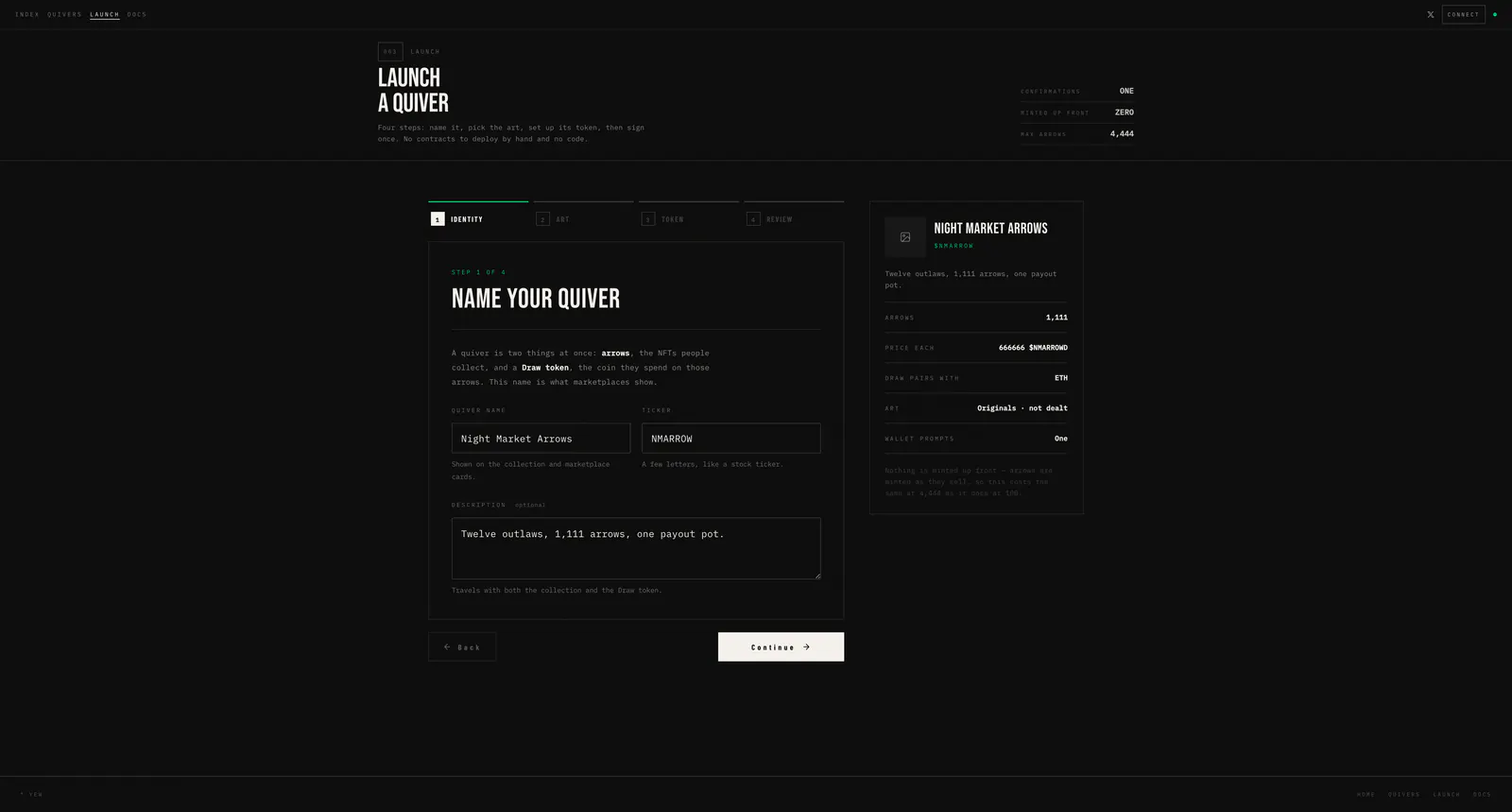
Name it, upload your art or take the Originals pack, then set the supply and the price per arrow. One confirmation launches the token, buys your first tokens, and creates the collection.
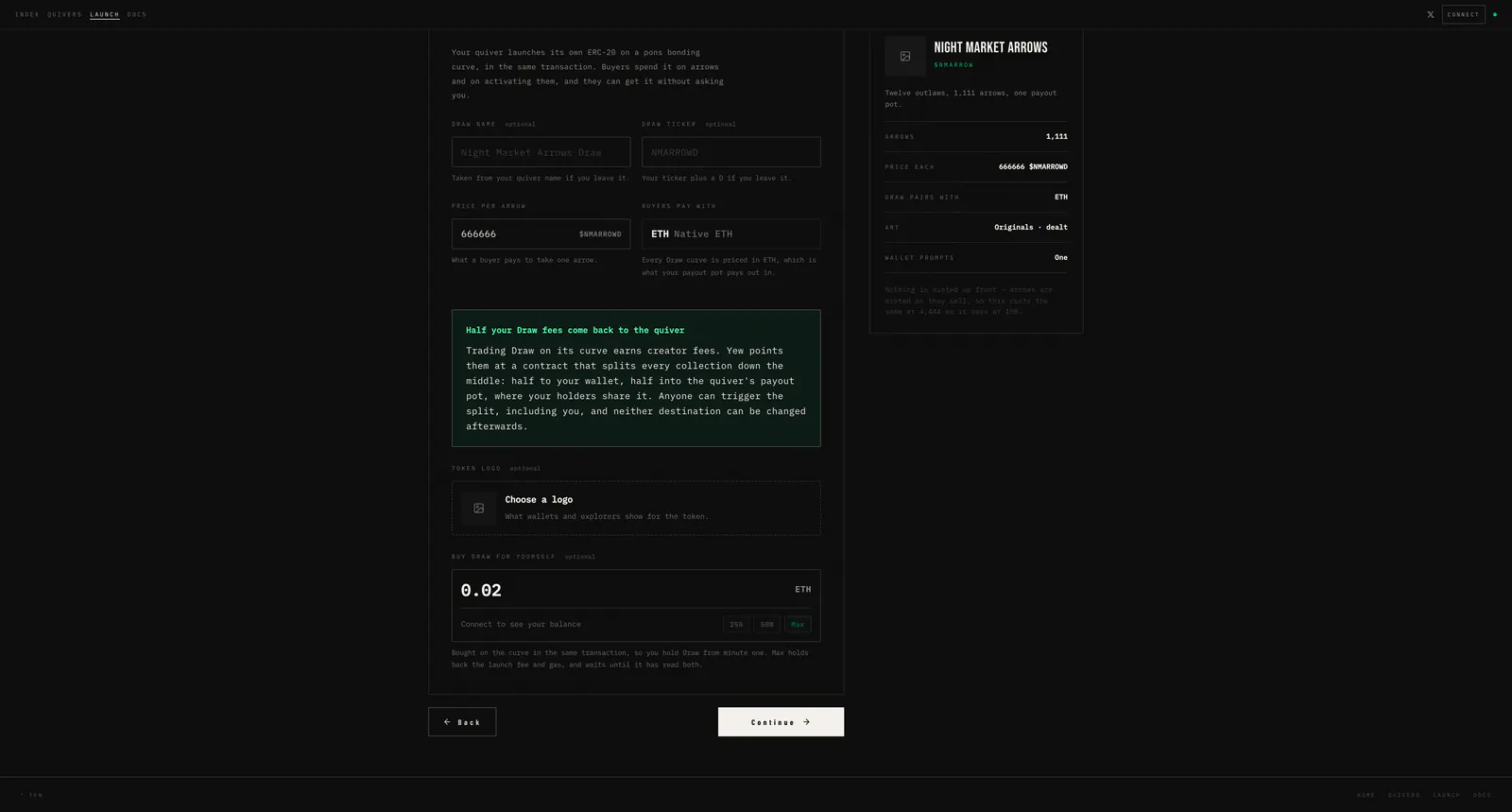
The quiver’s token trades on a bonding curve from the first block. Buyers swap ETH for Draw, then spend Draw on arrows. No listing to wait for.
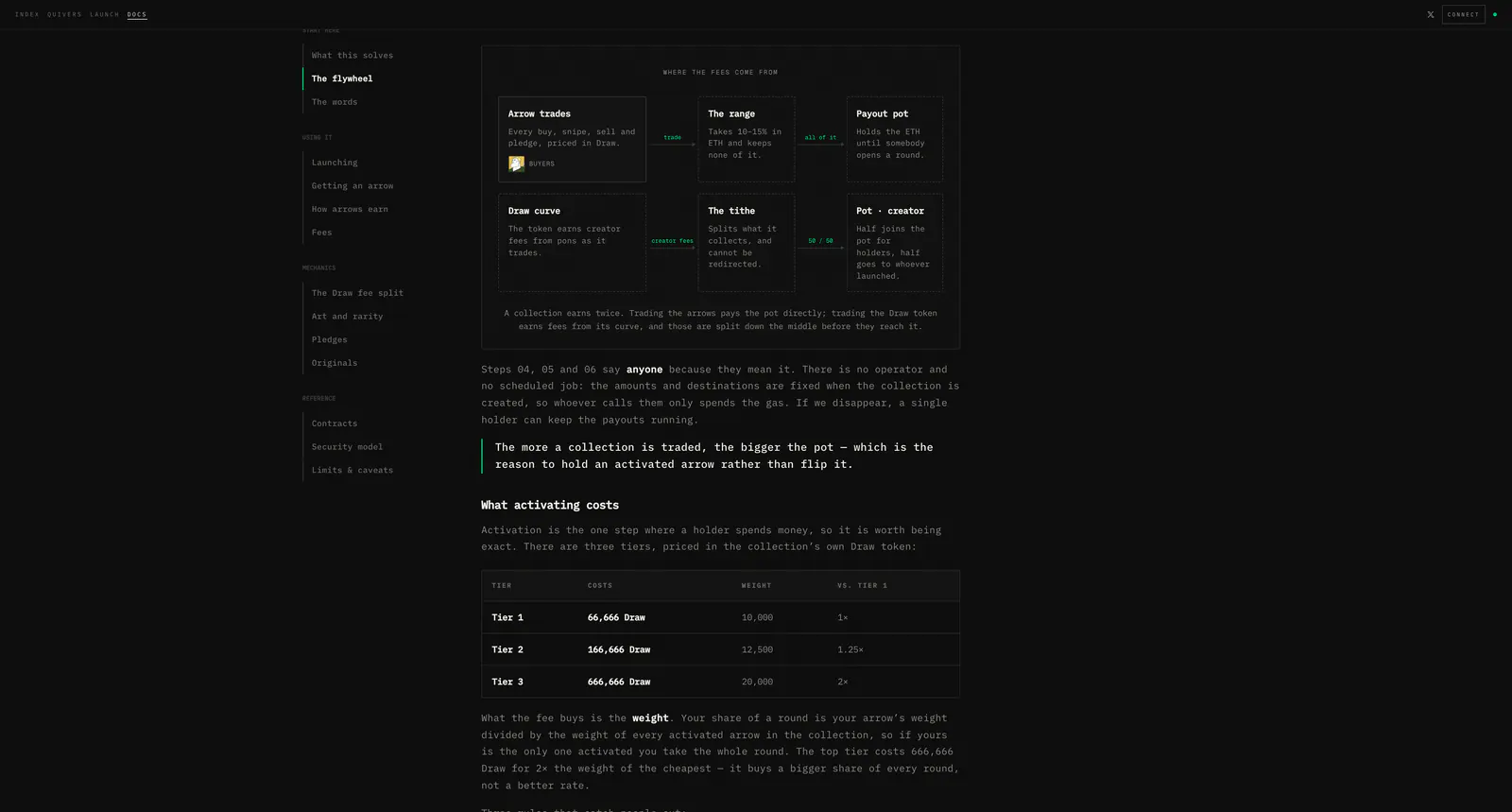
Every trade adds ETH to the payout pot, and half the fees the token earns are pulled in alongside them. The range resells arrows people sold back before it mints new ones.
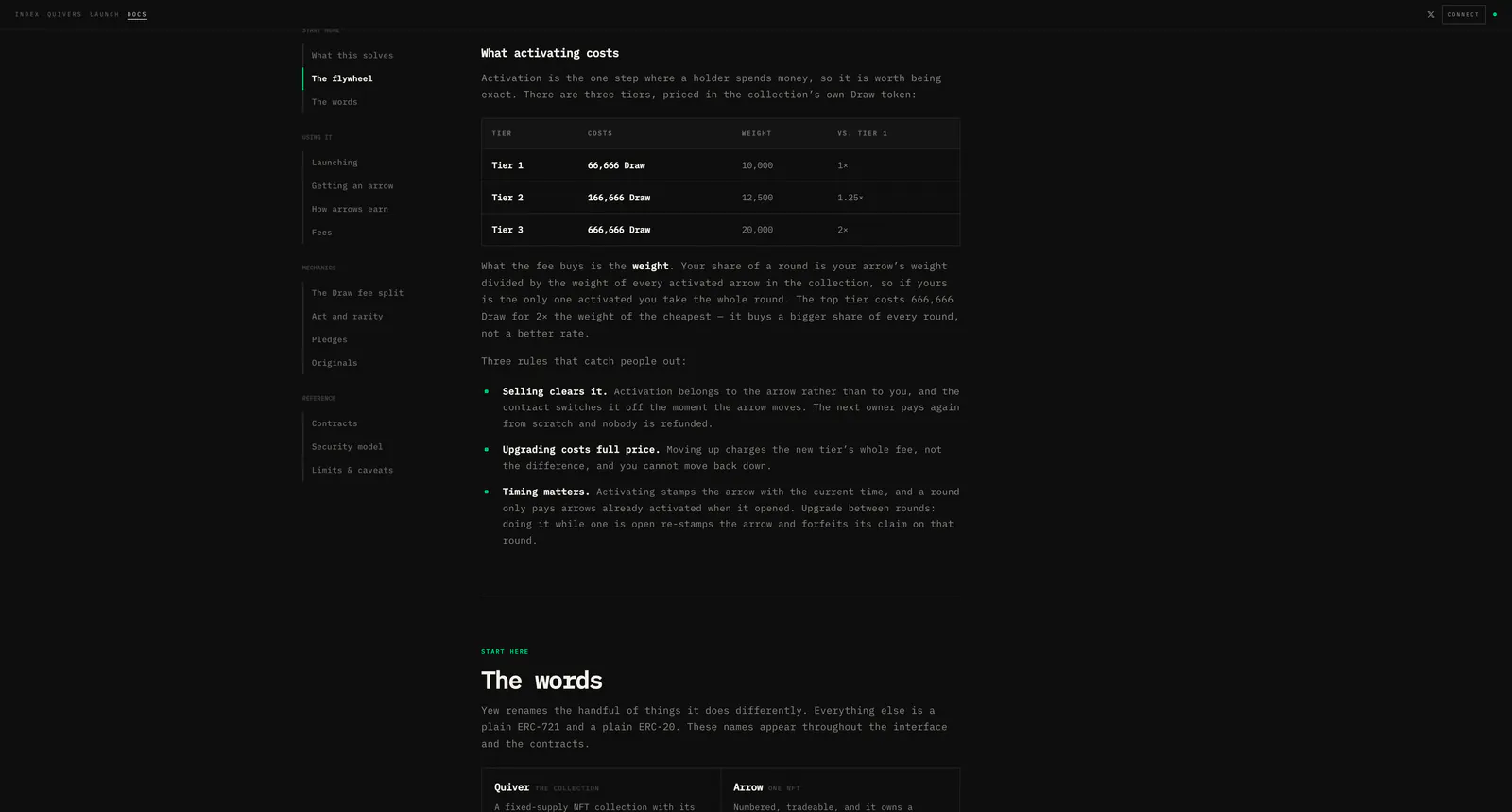
Activating an arrow with Draw switches its payouts on. Once the pot fills, anyone can call Payday, and each activated arrow claims its share into its pouch.